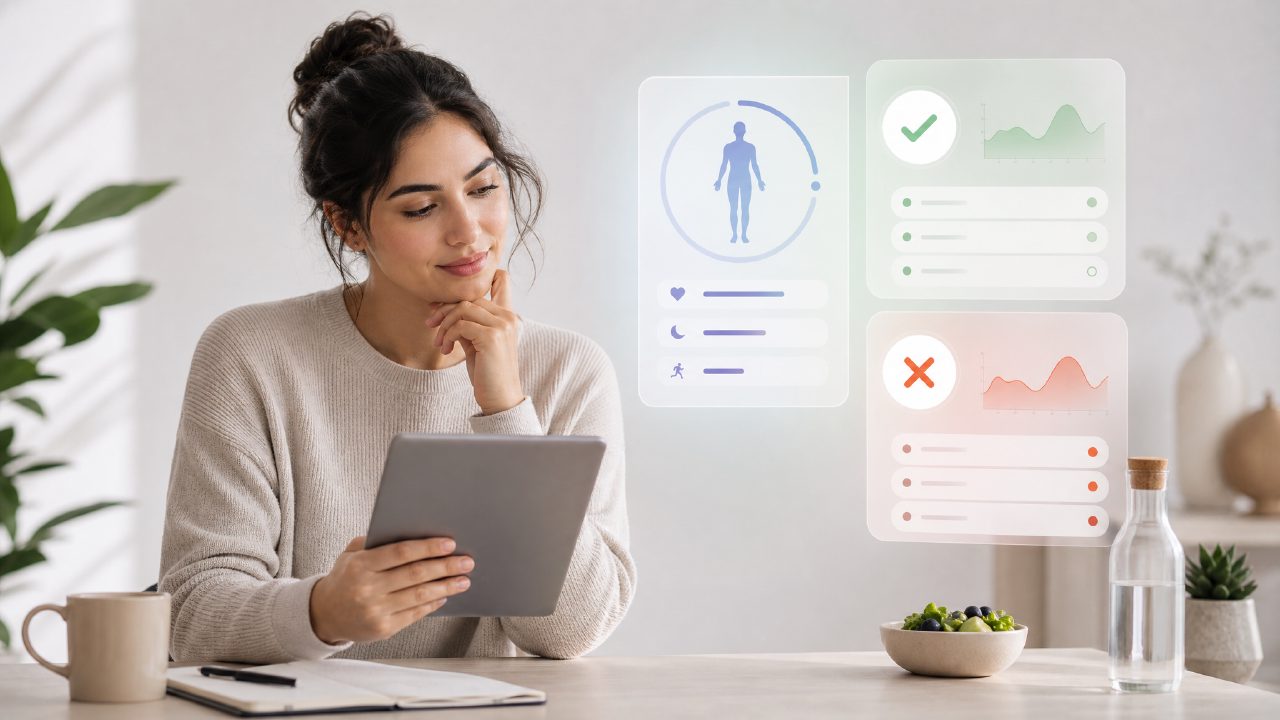
I’ve been testing zaso.ai’s Health tool for a couple of weeks now. The premise intrigued me — a focused AI assistant that’s part of a six‑tool suite, each doing one thing well. No bloated all‑in‑one. I wanted to see if this narrow approach actually helps with daily health tracking or if it just becomes another forgotten widget.
Here’s my honest checklist — what works, what doesn’t, and where you might hit a wall.
What the Health tool does (and doesn’t)
- Dashboard and Planner sync reasonably well. The Health dashboard shows a simple snapshot of your daily habits — water intake, steps, sleep rough estimates. It connects to the Planner, so reminders for a walk or a meal prep show up in your day. That integration is clean, but it’s not deep. No charts, no trends over weeks unless you dig through a separate log.
- Tasks stay focused but shallow. You can create health‑related tasks (e.g., “stretch at 3pm” or “take vitamin D”). They live inside the Tasks tool, and the AI nudges you if you miss one. Nice touch: it doesn’t pile on guilt. Trade‑off: you can’t attach a note or a photo to a task. So if you want to log a symptom or a meal, you’re stuck using the basic text field.
Where it fits into your broader system
This is where the other zaso tools come in. The Health tool works best when you already have a rhythm of Daily Planning and a solid Productivity System in place. For instance, I use the Planner to block 10 minutes each morning, then the Health tool just auto‑fills a few prompts. It feels like a small cog, not a standalone app — and that’s fine, as long as you don’t expect a full medical tracker.
I also tried linking it with a Digital Journal habit. The journal tool lets you write free‑form entries, but the Health tool doesn’t pull from it automatically. You have to manually check what you wrote. That’s a mild friction — the Personal Knowledge aspect feels underdeveloped here. It records what you input, but it doesn’t connect the dots between your moods and your steps, for example.
Three realistic observations
- It’s great for people who hate complex health dashboards. I’m not a data geek. I don’t want weekly reports. The Health tool gives me a simple checkbox for “did I move today” and that’s often enough. But if you’re tracking macros or chronic conditions, this will feel too thin.
- The AI suggestions are generic but helpful. One day the tool suggested I take a 5‑minute breathing break based on my Planner’s packed schedule. It wasn’t revolutionary, but it was timely. I appreciated that it didn’t lecture — just a soft nudge.
- There’s a gap in Life Management integration. The suite includes a tool for life admin, but the Health tool doesn’t talk to it. So if your doctor appointment is in the Life Manager, your Health log won’t know about it. That feels like a missed opportunity for Workflow Management across the suite.
Who should (and shouldn’t) use this?
If you already have a Productivity System that includes a daily check‑in and you just want a no‑fuss way to log a few health basics, the Health tool will probably earn its spot. I’ve kept it around because it’s less annoying than full‑blown health apps.
But if you need granular tracking, data export, or any medical context — look elsewhere. Also, the tool doesn’t sync with wearables, so step counts are manual. That’s a hard limit.
Final note
I keep coming back to it because it’s simple and stays out of the way. The Health tool isn’t a breakthrough, but it doesn’t need to be. It’s one small, honest piece of a larger Personal Knowledge toolkit. If that sounds like your speed, give it a try. If you’re already overwhelmed by health apps, this won’t fix that.
Comments
Leave a Comment